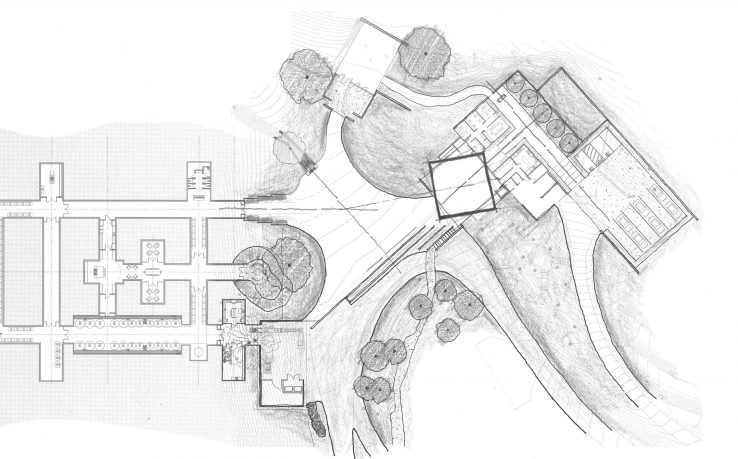
This project envisions a subtle yet striking new winery on a storied estate set in the eastern foothills of the Oakville AVA, a property that is home to one of the Napa Valley’s oldest and most esteemed vineyards.
To maintain the integrity of the site, and to ensure that no existing vines or trees would be lost, the client and team decided to keep the design within the footprint of the existing winery building. The essence of the design is a carefully-orchestrated journey, accomplished on foot with thoughtfulness and intentionality – a transition that brings visitors from the outside world into a curated experience of wine and place. At specific points along the way, works of art—including Here by Antony Gormley and a wire sculpture by Rana Beum—act as beacons in this procession of discovery.
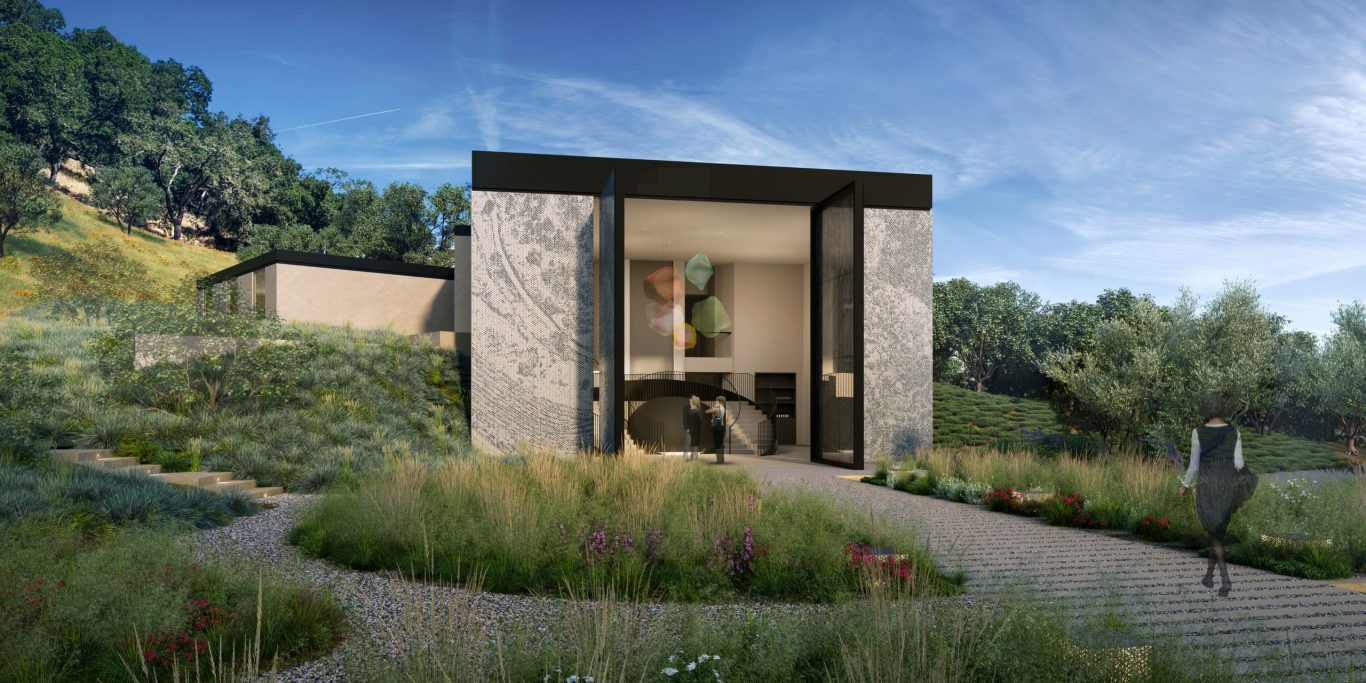
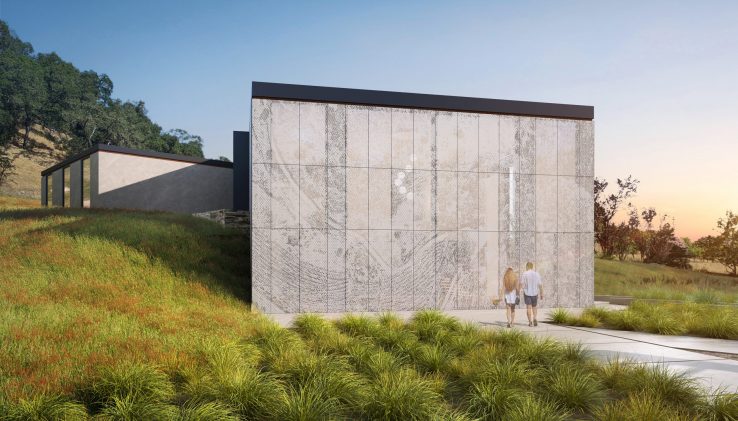
A pedestrian pathway leads visitors from initial arrival through the entry portal—a simple, monolithic cube rotated toward the primary entry point to the caves. A circular central garden, set where the axis of the entry portal and cave portal meet, is a quiet, contemplative space that provides the plan’s connective tissue. Within the portal building, a sweeping staircase leads to a central landing, aligned to reveal views of the valley to the west. In an abstract expression of place, the building is clad in a metal skin, perforated with an aerial image of the site’s unique terracing and backed with lighter aluminum panels to reveal the image that wraps the structure. On the front facade, full-height windows and polycarbonate doors transform the structure into a glowing lantern in the evening.
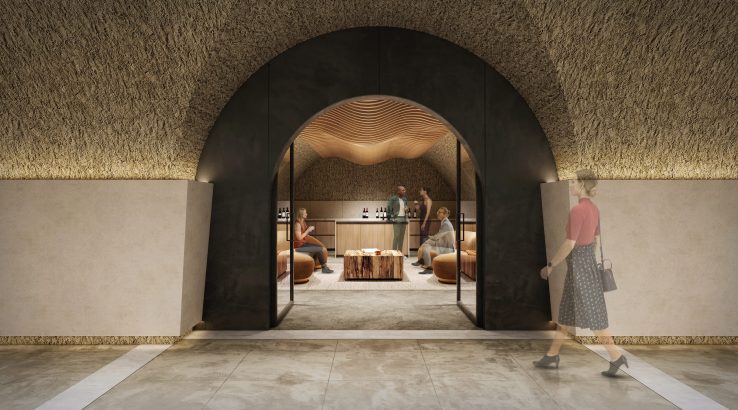
The journey culminates at the caves, with the geometric form of an origami-like portal revealing itself slowly as visitors draw near. The site’s existing caves will be retrofitted and expanded to accommodate wine production and hospitality, including two VIP tasting spaces that will accommodate food and wine pairings. A second, central portal opens to a private sunken garden set into the slope of the hill, drawing light deep into the interior. The caves will be